
Finance Digest
Brief Overview of IFRS S1 & S2: A New Era in Sustainability Reporting
By Gobeze Dessalegn, January 2026
Authors
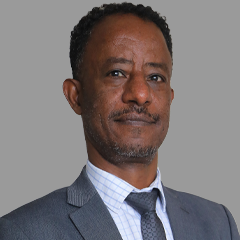
Gobeze Dessalegn
Director, HST Learning Solutions
Introduction
The issuance of IFRS S1 and IFRS S2 by the International Sustainability Standards Board (ISSB) in June 2023 represents a landmark development in global sustainability reporting. For the first time, organizations have a unified, investor-focused framework for disclosing sustainability-related and climate-related information in a way that is consistent, comparable, and decision-useful.
These standards require entities to disclose material sustainability-related and climate-related risks and opportunities that could affect cash flows, access to finance, or the cost of capital—firmly integrating sustainability considerations into mainstream financial reporting.
Why IFRS S1 and S2 Were Developed
The ISSB was established under the IFRS Foundation to address the fragmentation that has long characterized Environmental, Social, and Governance (ESG) reporting. It complements the International Accounting Standards Board (IASB) by focusing on sustainability-related financial disclosures.
IFRS S1 and S2 are the first standards issued by the ISSB and consolidate widely used frameworks such as the Task Force on Climate-related Financial Disclosures (TCFD), the Sustainability Accounting Standards Board (SASB), and the Climate Disclosure Standards Board (CDSB) into a single, coherent structure. IFRS S1 sets out general requirements for sustainability-related financial information, while IFRS S2 focuses specifically on climate-related disclosures. The standards are also designed to work alongside jurisdictional requirements and frameworks such as the Global Reporting Initiative (GRI).
What the Standards Require
At the heart of both standards is the concept of materiality. Entities are required to disclose sustainability-related and climate-related matters that could reasonably influence the decisions of users of general-purpose financial reports.
Sustainability-related risks and opportunities are those factors that may affect an entity’s financial performance, access to financing, or cost of capital. Climate-related risks include both physical risks, such as floods and droughts, and transition risks arising from policy, regulatory, technological, or market changes.
Core Content Structure: The Four Pillars
Both IFRS S1 and IFRS S2 are built on the four-pillar framework originally developed by the TCFD, providing continuity and clarity for preparers and users of sustainability information.
Governance focuses on how an entity’s board and management oversee sustainability-related and climate-related risks and opportunities, including the roles, responsibilities, and processes used to provide effective oversight.
Strategy requires entities to explain how sustainability and climate-related risks and opportunities affect their business model, strategy, and financial planning over the short, medium, and long term, including the resilience of the strategy under different scenarios.
Risk Management addresses how an entity identifies, assesses, prioritizes, and manages sustainability and climate-related risks, and how these processes are integrated into the entity’s overall risk management framework.
Metrics and Targets require disclosure of the quantitative indicators used to assess performance and progress, including targets set by management and the metrics used to monitor achievement. Under IFRS S2, this includes mandatory disclosure of Scope 1, Scope 2, and Scope 3 greenhouse gas emissions in accordance with the GHG Protocol.
Together, these four pillars ensure that sustainability disclosures are not isolated statements, but are clearly linked to governance, strategy, risk management, and performance.
Global Adoption and Local Context
While the ISSB sets a global baseline, it does not mandate adoption. Implementation depends on decisions taken by governments, regulators, and stock exchanges in individual jurisdictions. Nonetheless, IFRS S1 and S2 have received strong international endorsement, including from the G7, G20, IOSCO, the Financial Stability Board, and authorities in more than 40 jurisdictions.
The standards are effective from 1 January 2024, with early adoption permitted if both standards are applied together. To support implementation, the ISSB has established a Transition Implementation Group and launched capacity-building initiatives.
In Ethiopia, the Accounting and Auditing Board of Ethiopia (AABE) has begun orienting stakeholders, although a formal national implementation roadmap has yet to be issued.
Challenges and Opportunities
Adopting IFRS S1 and S2 presents challenges, particularly in relation to data availability, system integration, and capacity building— especially in emerging markets. However, these challenges are balanced by significant opportunities, including enhanced investor confidence, stronger governance and risk management, and better alignment between sustainability objectives and business strategy.
Conclusion
IFRS S1 and IFRS S2 represent a major step toward embedding sustainability and climate considerations into financial reporting. By providing a consistent and globally comparable baseline, they enhance transparency, accountability, and decision-making.
As adoption accelerates, organizations that act early— by strengthening governance, improving data systems, and integrating sustainability into strategic planning— will be better positioned to meet regulatory expectations and demonstrate long-term resilience.
Related Insights
How can we help?
Get in touch with us
HST works with clients to solve business growth, operational, people, financial, tax, governance, risk, learning and compliance challenges with locally relevant solutions.
Contact
Addis Ababa: Ethio-China Friendship Ave,
Mina Building 4th and 5th Floor
Addis Ababa Tel: +251 115 52 76 66/67
Adama: Gurmu Woreda around Mebrat Hayle,
Oromia Bank building 2nd Floor
Adama Tel: +251915156522/+251911866404
info@hst-et.com
P.O. Box 25701