

Finance Digest
IFRS 18 and the Future of Financial Reporting in Ethiopia
By Gobeze Dessalegn, January 2026
Authors
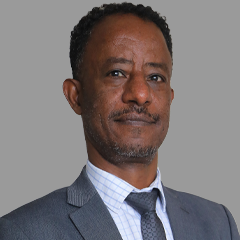
Gobeze Dessalegn
Director, HST Learning Solutions
The International Accounting Standards Board (IASB) issued IFRS 18: Presentation and Disclosure in Financial Statements in April 2024, marking the most significant overhaul of financial statement presentation in more than two decades. Effective for annual periods beginning on or after 1 January 2027, IFRS 18 replaces IAS 1 and seeks to improve clarity, consistency, and comparability in how entities present financial performance. Early adoption is permitted, and entities in Ethiopia would benefit from beginning preparations well in advance.
At its core, IFRS 18 does not change how profit is calculated; rather, it changes how performance is presented and explained. This distinction is critical for preparers, regulators, investors, and lenders alike, particularly in an emerging market such as Ethiopia where transparency and comparability of financial information are increasingly important.
A More Structured Income Statement
One of the most visible changes introduced by IFRS 18 is a more structured statement of profit or loss. Under the previous standard, IAS 1, entities enjoyed considerable flexibility in how income and expenses were grouped and subtotals were presented. While this flexibility allowed customization, it also reduced comparability between entities, even within the same industry.
IFRS 18 addresses this by requiring entities to classify income and expenses into clearly defined categories— operating, investing, financing, income tax, and discontinued operations. In addition, two mandatory subtotals must now be presented: operating profit and profit before financing and income tax. These subtotals are expected to become key reference points for users of financial statements.
For Ethiopian businesses, particularly manufacturing companies, service providers, and financial institutions, this will result in income statements that are easier to understand and compare. Banks, investors, and development partners will be able to assess operating performance without the noise of financing structures or one-off investment gains.
Clarifying What “Operating Profit” Really Means
Under IFRS 18, operating profit is clearly defined as the result of income and expenses arising from an entity’s main business activities. This may seem straightforward, but in practice it requires careful judgment, especially for entities whose core business involves investing or financing activities, such as banks, microfinance institutions, and investment companies.
In the Ethiopian context, this clarification is particularly relevant. Financial institutions will need to reassess how they classify interest income, interest expense, and related items. Non-financial entities, meanwhile, will benefit from a more consistent definition of operating performance, improving discussions with lenders, shareholders, and regulators.
Bringing Management Performance Measures into the Open
A major innovation under IFRS 18 is the introduction of Management-Defined Performance Measures (MPMs) into audited financial statements. Many Ethiopian companies already use alternative performance measures— such as adjusted profit or EBITDA— in board reports, investor presentations, or loan negotiations. Previously, these measures were largely unregulated.
IFRS 18 now requires that such measures, if used publicly, be disclosed in a dedicated note, clearly explained, and reconciled to IFRS-defined figures. Importantly, these disclosures will be subject to audit.
This change has practical implications for Ethiopian entities. It enhances credibility with banks, donors, and investors by ensuring that management’s preferred performance indicators are transparent and consistent with audited results. At the same time, it places greater responsibility on preparers to ensure discipline and consistency in how these measures are defined and communicated.
Improved Transparency Through Better Disaggregation
Another key focus of IFRS 18 is how information is grouped and presented. The standard introduces stronger principles on aggregation and disaggregation, discouraging the overuse of vague labels such as “other income” or “miscellaneous expenses.” Instead, entities are expected to present information in a way that reflects shared economic characteristics.
For Ethiopian companies, this will likely lead to more informative financial statements, particularly for sectors where cost structures are critical, such as manufacturing, construction, and agriculture-related businesses. More meaningful disaggregation can also support better internal decision-making and cost control.
Implications Beyond the Income Statement
IFRS 18 also influences other parts of the financial statements. The statement of cash flows, for example, will be more closely aligned with the new profit or loss structure, with the indirect method starting from operating profit. The statement of financial position encourages clearer presentation, including separate disclosure of goodwill. Additional disclosure requirements also apply to earnings per share.
These changes will require updates to accounting systems, charts of accounts, and internal reporting processes. For many Ethiopian entities, particularly those transitioning to more sophisticated financial reporting frameworks, this represents both a challenge and an opportunity.
Looking Ahead
IFRS 18 represents a significant step forward in financial reporting. By standardizing how performance is presented and ensuring greater transparency around management-defined measures, it addresses long-standing concerns of users of financial statements. For Ethiopia, successful implementation of IFRS 18 can contribute meaningfully to stronger corporate governance, better access to capital, and a more credible financial reporting environment.
What Ethiopian CFOs Should Do Now- Practical Actions Ahead of IFRS 18 (Effective 2027)
Although IFRS 18 becomes effective in 2027, the transition will require time and careful planning. Hence, it is expected of the CFOs and finance managers to:
1. Perform an early impact assessment- Review current financial statements to identify where presentation, subtotals, and classifications will change under IFRS 18, particularly the statement of profit or loss.
2. Revisit the chart of accounts and reporting structures- Ensure accounts can support the new operating, investing, and financing categories, as well as mandatory subtotals such as operating profit.
3. Identify and document management-defined performance measures (MPMs)- List all alternative performance measures currently used in board reports, investor decks, or loan discussions, and assess how they will be disclosed and reconciled under IFRS 18.
4. Engage auditors and regulators early- Discuss interpretation issues— especially for banks— to avoid late surprises during transition.
5. Invest in capacity building- Train finance teams and senior management on IFRS 18 requirements to ensure consistent understanding across the organization.
6. Align internal and external reporting- Use the IFRS 18 structure to improve internal performance reporting, budgeting, and communication with lenders, investors, and development partners.
The message is clear: ‘the time to start preparing is now’.
Related Insights
How can we help?
Get in touch with us
HST works with clients to solve business growth, operational, people, financial, tax, governance, risk, learning and compliance challenges with locally relevant solutions.
Contact
Addis Ababa: Ethio-China Friendship Ave,
Mina Building 4th and 5th Floor
Addis Ababa Tel: +251 115 52 76 66/67
Adama: Gurmu Woreda around Mebrat Hayle,
Oromia Bank building 2nd Floor
Adama Tel: +251915156522/+251911866404
info@hst-et.com
P.O. Box 25701